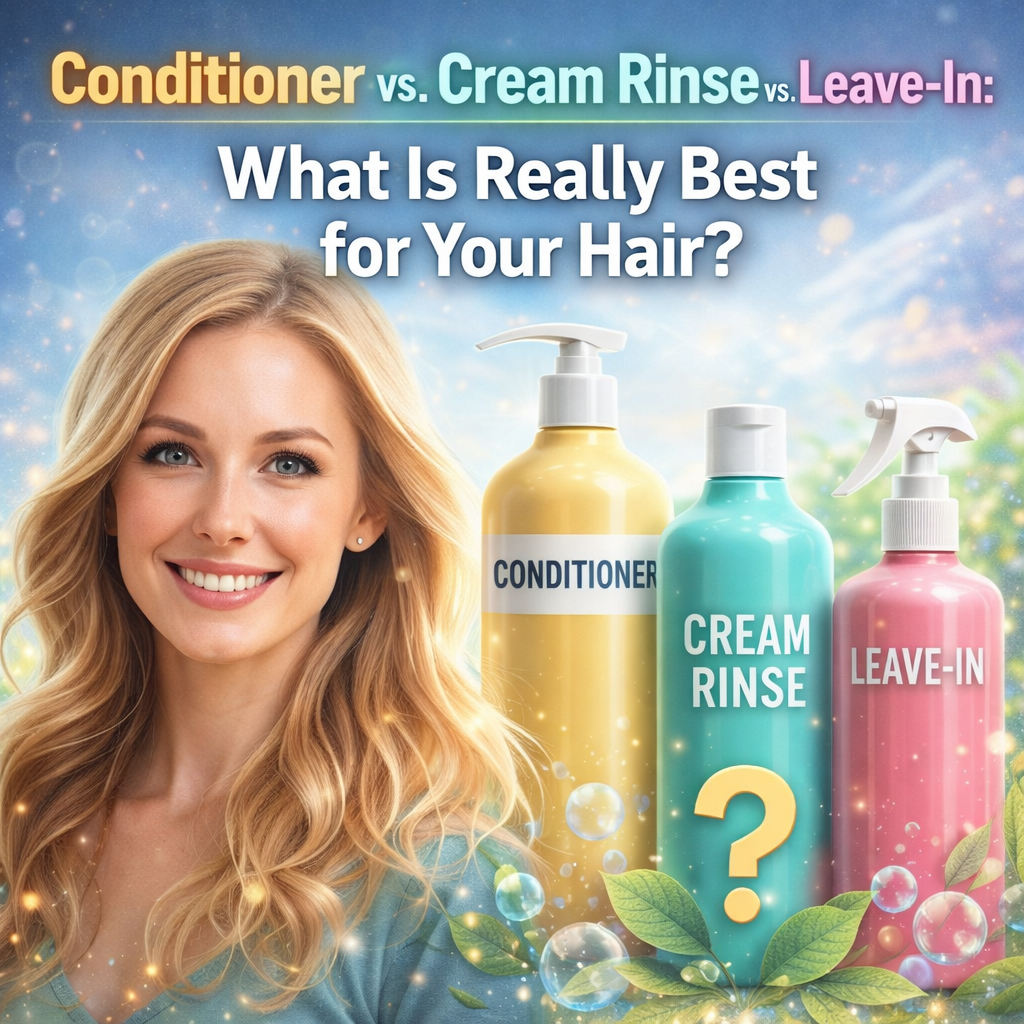
If you’ve ever stood in the hair care aisle—or even stared at the bottles in your own shower—wondering what the difference is between all the conditioning products, you are not alone. Terms like “cream rinse,” “conditioner,” and “leave-in conditioner” are often used interchangeably, yet they serve distinct purposes.
At SAP Salon in Columbus, we believe that beautiful hair starts with understanding. Knowing what each product does—and which one is right for your specific hair type—can be the difference between a good hair day and a great one.
In this comprehensive guide, we’ll cut through the marketing hype and explain, once and for all, the differences between cream rinses, traditional rinse-out conditioners, and leave-in conditioners. We’ll also help you determine which combination of products will give you the healthiest, most radiant hair possible.
Table of Contents
-
The Purpose of Conditioning: Why Your Hair Needs It
-
What Is a Cream Rinse? The Vintage Classic
-
What Is a Rinse-Out Conditioner? The Daily Essential
-
What Is a Leave-In Conditioner? The All-Day Protector
-
Head-to-Head Comparison: Key Differences at a Glance
-
How to Choose Based on Your Hair Type
-
Building the Perfect Conditioning Routine
-
Common Myths About Conditioners—Busted
-
Frequently Asked Questions (FAQ)
-
Visit SAP Salon for Personalized Advice
The Purpose of Conditioning: Why Your Hair Needs It
Before diving into the differences, it helps to understand what any conditioning product is supposed to do.
When you shampoo your hair, you remove dirt, oil, and product buildup. However, shampoo also roughs up the hair cuticle—the outermost layer of the hair shaft, which is made of overlapping scales (like shingles on a roof) . This leaves hair feeling rough, looking dull, and prone to tangling and breakage.
Conditioners work by depositing positively charged ingredients (like cationic surfactants) onto the negatively charged surface of your hair . This smooths the cuticle, neutralizes static, and locks in hydration . The result is hair that is softer, shinier, easier to detangle, and more resistant to damage .
However, not all conditioners are created equal. The differences lie in their formulation, how long they stay on the hair, and their specific function.
What Is a Cream Rinse? The Vintage Classic
The term cream rinse might sound old-fashioned, and that’s because it is. Rinse-off conditioners were originally called “cream rinses” because they were emulsions (a creamy mixture of oil and water) .
What It Does
A cream rinse is a lightweight product designed primarily for detangling and smoothing . Its main job is to make hair easier to comb through after washing, reducing breakage caused by tugging and pulling.
Texture and Formulation
Cream rinses typically have a thin, milky consistency. They are built around light emollients that coat the hair’s surface quickly but do not penetrate deeply . Historically, they contained fewer heavy oils, proteins, and silicones compared to modern conditioners .
Best For
Because of its lightweight nature, a cream rinse is ideal for:
-
Fine or thin hair that gets weighed down easily
-
Oily hair types that need just a touch of moisture
-
Quick, daily use when you don’t need intensive repair
How to Use
Apply after shampooing, distribute quickly through the ends, and rinse out almost immediately (usually within 30 seconds to 1 minute) .
Is It Still Relevant?
While the term “cream rinse” has largely faded from popular shelves—replaced by the broader category of “conditioner”—the concept remains valuable . If you see a product labeled as a cream rinse today, think of it as the “sprinter” of the conditioning world: fast, light, and efficient, but not built for deep endurance.
What Is a Rinse-Out Conditioner? The Daily Essential
This is the product most people think of when they hear the word “conditioner.” It is the standard, everyday conditioner you use in the shower after shampooing .
What It Does
A rinse-out conditioner has a more complex job than a cream rinse. Its purpose is to:
-
Seal the cuticle after the roughening effects of shampoo
-
Provide deep hydration to the hair shaft
-
Repair (temporarily) signs of damage by depositing proteins and lipids
-
Neutralize static and reduce frizz
Texture and Formulation
Rinse-out conditioners are richer and creamier than cream rinses. They contain a higher concentration of active ingredients, including:
-
Fatty alcohols (like cetyl alcohol) for softening
-
Conditioning quats (like behentrimonium chloride) for slip and detangling
-
Oils and butters (like argan, shea, or coconut) for nourishment
-
Hydrolyzed proteins (like keratin or wheat protein) to strengthen the hair
-
Silicones (like dimethicone) for shine and heat protection
How to Use
Apply to the lengths and ends of damp, shampooed hair. Leave it on for 1-3 minutes (this allows the ingredients to adhere to the hair) . Then, rinse thoroughly with lukewarm or cool water to seal the cuticle .
Best For
This is the workhorse for most hair types, especially:
-
Dry or damaged hair needing moisture
-
Thick or coarse hair that requires heavy conditioning
-
Color-treated hair (using color-safe formulas)
What Is a Leave-In Conditioner? The All-Day Protector
A leave-in conditioner is a completely different category of product. As the name suggests, you do not rinse it out . It is designed to remain on your hair throughout the day, providing continuous benefits.
What It Does
While a rinse-out conditioner works quickly in the shower, a leave-in acts as an ongoing defense system . Its jobs include:
-
Providing long-lasting moisture that doesn’t wash away
-
Offering heat protection before styling with blow dryers or flat irons
-
Shielding hair from environmental stressors like UV rays and humidity
-
Detangling throughout the day
-
Controlling frizz and adding shine
Texture and Formulation
Leave-in conditioners are formulated to be lighter than rinse-out products. If they were too heavy, they would weigh hair down or make it look greasy. They often come as:
-
Lightweight sprays (great for fine hair)
-
Milky lotions (good for medium textures)
-
Creams (ideal for thick, curly, or coily hair)
They contain many of the same ingredients as rinse-out conditioners, but in lower concentrations to prevent buildup .
How to Use
After showering, gently squeeze excess water from your hair. Apply a small amount of leave-in conditioner to your mid-lengths and ends (avoiding the roots to prevent greasiness) . Comb through to distribute evenly, and then style as usual. Do not rinse.
Best For
Leave-in conditioners are essential for:
-
Curly, coily, or wavy hair that needs constant moisture to maintain definition and fight frizz
-
Dry or damaged hair needing extra care
-
Heat styling (provides a protective barrier)
-
Anyone living in humid or sunny climates
Head-to-Head Comparison: Key Differences at a Glance
To make it easy, here is a quick comparison of the three product types.
| Feature | Cream Rinse | Rinse-Out Conditioner | Leave-In Conditioner |
|---|---|---|---|
| Primary Job | Light detangling & smoothing | Deep hydration, repair, cuticle sealing | Ongoing moisture, protection, styling aid |
| Texture | Thin, milky, lightweight | Rich, thick, creamy | Varies: spray, milk, or cream |
| Key Ingredients | Light emollients | Fatty alcohols, oils, proteins, silicones | Lighter versions of rinse-out ingredients |
| Application Time | < 1 minute, then rinse | 1-5 minutes, then rinse | Apply to damp hair, do not rinse |
| Best Hair Types | Fine, oily, normal | Dry, damaged, coarse, color-treated | Curly, coily, dry, or heat-styled hair |
| Function | Basic maintenance | Repair & restore | Protect & style |
How to Choose Based on Your Hair Type
So, which one is “best”? The answer is that most people benefit from using more than one. Here’s a simple guide from the experts at SAP Salon.
For Fine or Thin Hair
-
Use: A lightweight cream rinse or a light rinse-out conditioner.
-
Avoid: Heavy leave-in creams that can flatten your hair.
-
Try: A leave-in spray if you need extra protection, as it won’t weigh you down .
For Thick or Coarse Hair
-
Use: A rich, moisturizing rinse-out conditioner every time you wash.
-
Add: A nourishing leave-in conditioner or hair milk to keep hair soft and manageable between washes.
For Curly or Coily Hair
-
Must Use: A hydrating rinse-out conditioner (or a co-wash) for moisture.
-
Must Use: A curl cream or rich leave-in conditioner to define curls, fight frizz, and lock in hydration . Curly hair is naturally drier, as oils struggle to travel down the spiral shaft .
For Wavy Hair
-
Use: A standard rinse-out conditioner.
-
Optional: A light leave-in spray or milk if you want to enhance your wave pattern .
For Dry or Damaged Hair
-
Use: An intensive rinse-out conditioner or hair mask 1-2 times a week .
-
Add: A daily leave-in conditioner to provide continuous repair and protection from styling tools.
For Color-Treated Hair
-
Use: A color-safe rinse-out conditioner with UV protection .
-
Add: A leave-in conditioner with UV filters to prevent color fading .
Building the Perfect Conditioning Routine
Think of these products not as rivals, but as teammates working together for the health of your hair .
Here is the ideal step-by-step routine:
Step 1: Shampoo
Cleanse your scalp and hair thoroughly.
Step 2: Rinse-Out Conditioner (or Cream Rinse)
Apply your chosen rinse-out product to your lengths and ends.
-
If your hair is fine or oily, use a cream rinse for 1 minute.
-
If your hair is dry, thick, or damaged, use a rich conditioner for 3-5 minutes.
Comb through with your fingers or a wide-tooth comb to ensure even distribution . Rinse with cool water.
Step 3: Towel Dry
Gently squeeze (do not rub) excess water from your hair.
Step 4: Leave-In Conditioner
Apply a leave-in product tailored to your hair type and styling needs.
-
Use a small amount and focus on the mid-lengths and ends .
Step 5: Style
Proceed with your usual styling routine. If using heat, ensure your leave-in offers thermal protection .
Common Myths About Conditioners—Busted
At SAP Salon, we believe in science over hearsay. Let’s clear up a few persistent myths.
Myth 1: Conditioner works better the longer you leave it on.
False. For standard rinse-out conditioners, 90% of the benefit comes from coating the hair surface. Once you’ve worked it through evenly (which takes a minute or two), leaving it on longer doesn’t make it work better . (Deep conditioning masks are the exception, as they are formulated for longer penetration times.)
Myth 2: Conditioner can repair split ends.
False. No conditioner can truly “repair” or “glue” split ends back together. Conditioners can temporarily smooth the cuticle and make hair appear healthier, but the only permanent fix for split ends is a trim .
Myth 3: Silicones in conditioner are always bad.
False. Silicones (like dimethicone) are effective ingredients that provide shine, smoothness, and heat protection . The concern about “buildup” usually comes from using a product that is too heavy for your hair type, or not cleansing effectively. Many modern, water-soluble silicones rinse out easily .
Myth 4: You should apply conditioner to your scalp.
False. Conditioner is designed for the lengths and ends of your hair, which are oldest and driest. Applying it to the scalp can clog pores, weigh hair down, and make it look greasy faster .
Frequently Asked Questions (FAQ)
Q1: Is a cream rinse the same thing as a conditioner?
A: Not exactly. While the terms are sometimes used interchangeably today, a traditional cream rinse is a lighter, quicker version of a conditioner. Its main focus is detangling, whereas a standard conditioner also provides deeper hydration and repair .
Q2: Do I need both a rinse-out and a leave-in conditioner?
A: For many people, especially those with dry, curly, or damaged hair, yes. The rinse-out conditioner provides the foundational moisture and repair in the shower. The leave-in acts as a shield, protecting your hair from heat, humidity, and UV damage throughout the day .
Q3: Can I use a regular conditioner as a leave-in?
A: It is not recommended. Rinse-out conditioners are formulated with higher concentrations of conditioning agents that are meant to be washed out. Leaving them on can lead to heavy buildup, weighing your hair down and making it look greasy .
Q4: What is the best product for detangling curly hair?
A: A combination works best. Use a rinse-out conditioner with high “slip” (detangling power) in the shower. After rinsing and while hair is still wet, apply a leave-in conditioner or curl cream to provide slip for styling and to maintain definition as the hair dries .
Q5: How much leave-in conditioner should I use?
A: Less is more. Start with a small, coin-sized amount (or a few pumps of a spray) and add more only if needed. Focus on the mid-lengths and ends. Using too much can make hair look heavy or greasy .
Q6: My hair feels greasy after conditioning. What am I doing wrong?
A: You may be using a product that is too heavy for your hair type, or you might be applying it too close to your roots. Switch to a lightweight cream rinse or a “volumizing” conditioner, and concentrate the product strictly on the ends of your hair .
Q7: Can I skip conditioner if I use a 2-in-1 shampoo?
A: 2-in-1 products are convenient, but they involve trade-offs. They won’t clean as well as a dedicated shampoo, nor will they condition as effectively as a separate conditioner . For optimal hair health, using separate products is always best.
Visit SAP Salon for Personalized Advice
Navigating the world of hair care can feel overwhelming, but you don’t have to do it alone. At SAP Salon in Columbus, we are passionate about helping our clients achieve their healthiest, most beautiful hair.
Whether you’re struggling with frizz, battling dryness, or just want to understand your hair better, our team of experienced stylists is here to help. We can assess your hair type, listen to your concerns, and recommend the perfect products and routine tailored just for you.
Stop by and see us:
SAP Salon
2927 N High Street
Columbus, OH 43202
Call us: 614-784-1177
Visit our website: www.sapsalon614.com
Let’s unlock your hair’s full potential—together.
Disclaimer: This blog is for informational purposes only. Individual hair needs may vary. A consultation with a professional stylist is recommended for personalized advice.