Table of Contents
-
Introduction: Your At-Home Care is Half the Service
-
The Foundation: Choosing the Right Professional Products for Your Hair
-
The Washing Ritual: It’s All About Technique
-
The Conditioning Commandments: Hydration is Key
-
The Drying & Stiling Strategy: Protect Your Investment
-
The Maintenance Mindset: Daily Habits for Healthy Hair
-
Your SAP Salon Home Care Prescription
-
Frequently Asked Questions (FAQ)
-
Sources & Professional Advice
1. Introduction: Your At-Home Care is Half the Service
You just left SAP Salon on High Street with a fresh cut, a stunning new color, and hair that feels like silk. It’s a masterpiece. The question is: how do you preserve that masterpiece until your next visit? The truth is, the longevity of your color and the health of your texture depend just as much on your at-home routine as on the skills of your stylist. The right products and techniques act as a shield, protecting your hair from fading, frizz, and damage. This guide provides a step-by-step routine, developed with salon-grade knowledge, to keep your color vibrant and your texture smooth from one appointment to the next.
2. The Foundation: Choosing the Right Professional Products for Your Hair
The single most important step you can take is to invest in professional-grade products recommended by your SAP Salon stylist. Drugstore shampoos often contain harsh sulfates and silicones that strip color and create buildup.
-
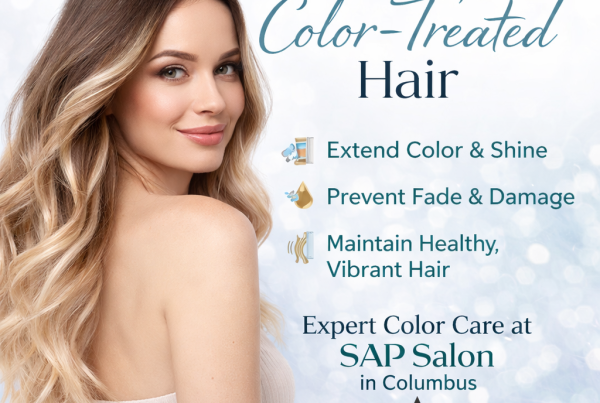
For Color-Treated Hair: You need a sulfate-free shampoo and a color-protecting conditioner. Look for formulas specifically labeled for color care, which are pH-balanced to keep the hair cuticle closed and color locked in.
-
For Dry or Damaged Hair: Seek out moisturizing or reparative lines with ingredients like keratin, amino acids, and natural oils (argan, marula) that rebuild the hair’s internal structure.
-
For Fine or Oily Hair: Use a volumizing or clarifying shampoo (used once a week) and a lightweight conditioner applied only to the ends to avoid weighing hair down.
-
The Weekly Treatment: Incorporate a deep conditioning mask or bond-building treatment (like Olaplex No.3 or K18) once a week. This is non-negotiable for repairing damage and maintaining moisture balance.
3. The Washing Ritual: It’s All About Technique
How you wash is just as important as what you use.
-
Pre-Wash Detangle: Before stepping into the shower, gently detangle your hair with a wide-tooth comb, starting from the ends and working up.
-
Rinse with Lukewarm Water: Hot water opens the hair cuticle, releasing color and moisture. Stick to lukewarm or cool water.
-
Shampoo the Scalp Only: Apply a quarter-sized amount of shampoo to your scalp. Massage gently with your fingertips (not nails) to cleanse. Let the suds run through the ends as you rinse—this is enough to clean them.
-
Rinse Thoroughly: Incomplete rinsing is a major cause of dullness.
Frequency Tip: Try to wash your hair only 2-3 times per week. This preserves your scalp’s natural oils and prevents color from fading quickly. Use dry shampoo on non-wash days.
4. The Conditioning Commandments: Hydration is Key
This step seals the cuticle and delivers hydration.
-
Squeeze Out Excess Water: After rinsing shampoo, gently squeeze hair to remove excess water so the conditioner can penetrate.
-
Apply from Mid-Length to Ends: Avoid applying conditioner directly to the roots, which can flatten fine hair. Focus on the areas that are oldest and most damaged.
-
Use a Wide-Tooth Comb: For even distribution, apply conditioner and then gently comb it through with a wide-tooth comb.
-
Let it Sit: Leave it on for at least 3-5 minutes. This is a perfect time to wash your body or shave.
-
Final Cool Rinse: Finish with a cool water rinse to seal the cuticle shut, locking in moisture and adding shine.
5. The Drying & Styling Strategy: Protect Your Investment
Heat styling is a major source of damage, but it can be done safely.
-
The Towel Test: Never rub hair violently with a towel. Instead, gently squeeze out moisture and wrap it in a microfiber towel or an old cotton t-shirt. These materials are less abrasive than terry cloth and prevent frizz.
-
Heat Protectant is Non-Negotiable: Before using any heat tool, apply a heat protectant spray or cream evenly through damp or dry hair. This creates a protective barrier.
-
Air Dry When Possible: Let your hair air dry 80-90% of the way before using a blow dryer. This drastically reduces heat exposure.
-
Use the Right Tools & Temp: Use a blow dryer with a concentrator nozzle and ionic technology. Keep it on a medium heat setting and keep it moving. For irons and wands, use the lowest effective temperature (below 350°F for most hair types).
6. The Maintenance Mindset: Daily Habits for Healthy Hair
-
Sleep on Silk: Swap your cotton pillowcase for a silk or satin one. It creates less friction, reducing breakage, frizz, and bedhead.
-
Protect from the Elements: Sun, chlorine, and saltwater are color’s worst enemies. In summer, use a UV-protectant spray and wear a hat. Before swimming, wet your hair and apply a leave-in conditioner to create a barrier.
-
Trim Regularly (Even Between Cuts): If you notice a split end, carefully snip it individually with sharp hair scissors. This prevents the split from traveling up the hair shaft.
7. Your SAP Salon Home Care Prescription
The most effective routine is one tailored to you. At your next visit to SAP Salon, ask your stylist for a “Home Care Prescription.” Based on your hair type, color service, and goals, they can recommend the specific professional products (like those from Kevin Murphy, Olaplex, or Redken) and techniques that will deliver the best results for your unique hair.
Your stylist is your partner in hair health. Don’t hesitate to ask, “What should I use at home to keep this look?”
8. Frequently Asked Questions (FAQ)
Q1: How often should I really wash my color-treated hair?
A: As infrequently as possible—aim for 2-3 times a week. Washing strips natural oils and accelerates color fade. Dry shampoo is your best friend for extending time between washes while adding volume.
Q2: Why does my salon color fade faster at home?
A: The most common culprits are: 1) Using a shampoo with sulfates, 2) Washing with water that is too hot, and 3) Not using a UV protectant when in the sun. Addressing these three areas will make the biggest difference.
Q3: Is it worth buying the expensive salon products my stylist recommends?
A: Absolutely. Professional products are more concentrated, use higher-quality ingredients, and are specifically formulated to work with salon services. They last longer because you use less, and they protect your financial investment in your color and cut.
Q4: What’s one quick thing I can do for shinier hair tomorrow?
A: Do your final hair rinse with cool water. This simple step seals the hair’s cuticle layer, making it lie flat and reflect more light, which equals instant shine.
Q5: My hair gets oily quickly, but the ends are dry. What should I do?
A: You likely have a combination scalp/hair type. Use a balancing shampoo on the roots only, and apply a moisturizing conditioner or hair mask only to the mid-lengths and ends. This strategy, known as “conditioner zoning,” hydrates where you need it without weighing down the roots.
9. Sources & Professional Advice
-
American Academy of Dermatology (AAD). “Tips for Healthy Hair.”
-
Modern Salon Magazine. “The Chemistry of Hair Color and Client Home Care.”
-
SAP Salon Stylist Protocols and Continuing Education Materials.
-
Product Knowledge Guidelines from Kevin Murphy, Olaplex, and Redken.
Ready to perfect your at-home routine? Bring your questions to your stylist at your next appointment or call SAP Salon for product recommendations.
SAP Salon
2927 N High Street
Columbus, OH 43202
Phone: 614-784-1177
Website: www.sapsalon614.com